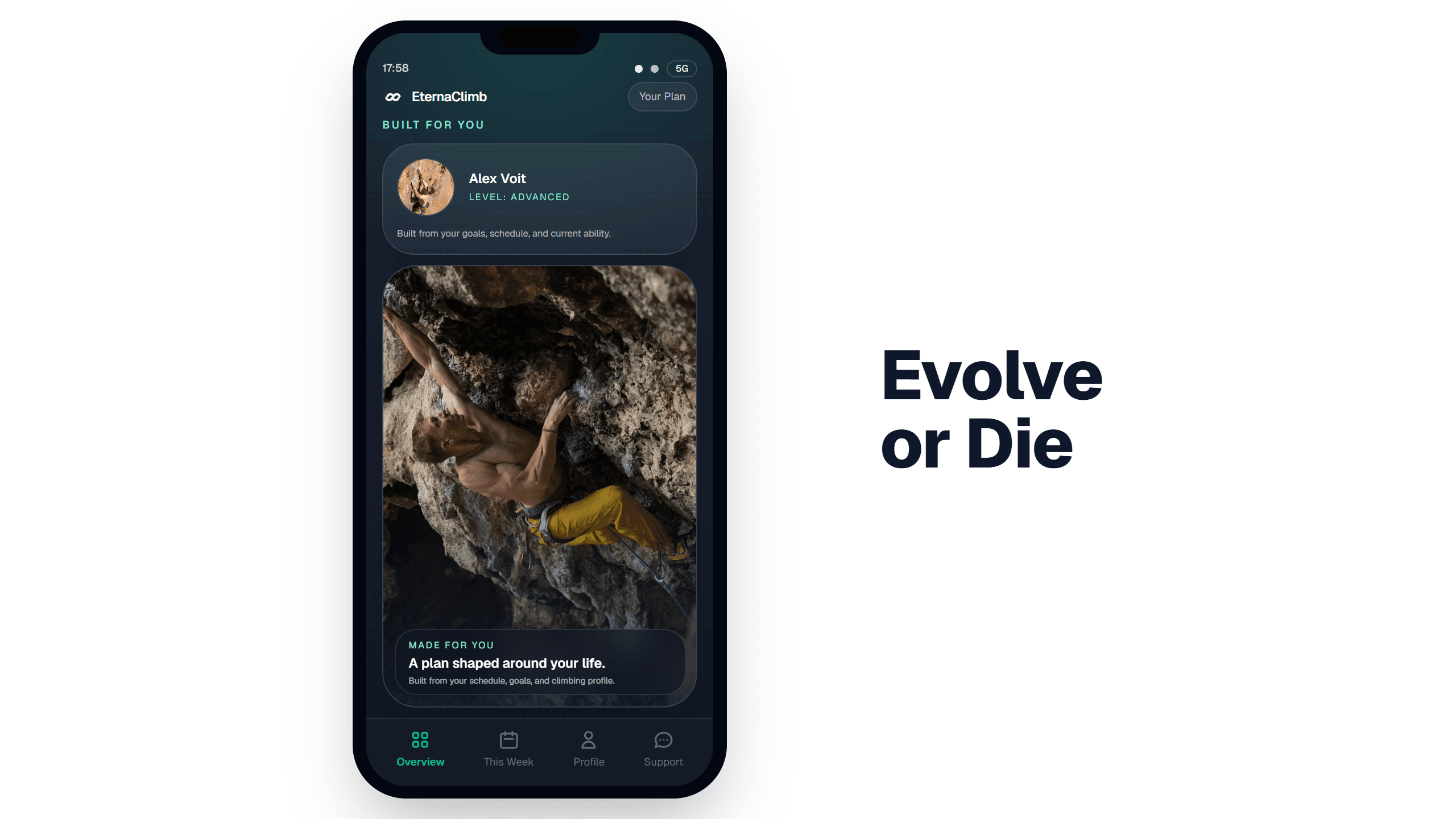
The most common question I get about EternaClimb is not about training. It is: what exactly do I get?
Fair question. A spreadsheet is a thing you can hold. A training cycle that opens week by week is harder to picture, and until you have seen one, it sounds like paying for nothing.
So here is the whole thing, step by step. From the first question you answer to the day you decide to leave. Whether this fits you at all, and what sits inside the program, I wrote about separately in our climbing training app. This one is about what happens to you, in order.
Step 1
Build your profile
Gender, age and climbing style tell me almost nothing about how to train you. On four answers I can only build an average plan. The same one everyone else gets.
So we ask more. How long you have climbed and at what grade. How your fingers hold small edges. How many moves before your forearms shut down. Whether you trust your feet, whether you read a route from the ground. What has hurt, and what we need to protect. Which gym you train in and what it has. What you have at home. Which days are free, and which ones we cannot touch.
Out of that comes a profile I can calculate load from instead of guessing. About 10 minutes.
Step 2
An algorithm builds the cycle, not AI
Test, Base, Build, Integration, Peak, Taper, Realization, Rest.
Every phase has one job. First the base, then strength on top of that base, then realization. That is how results grow and injury risk drops. Why this is an algorithm and not a neural net, and what else sits inside it, I explain in the same article. The short version: every exercise is in your program for a reason, and that reason can be said in words.
Inside the cycle work the principles any real preparation stands on:
- Individualization. Built around your grade, your days, your gear, not around an average climber.
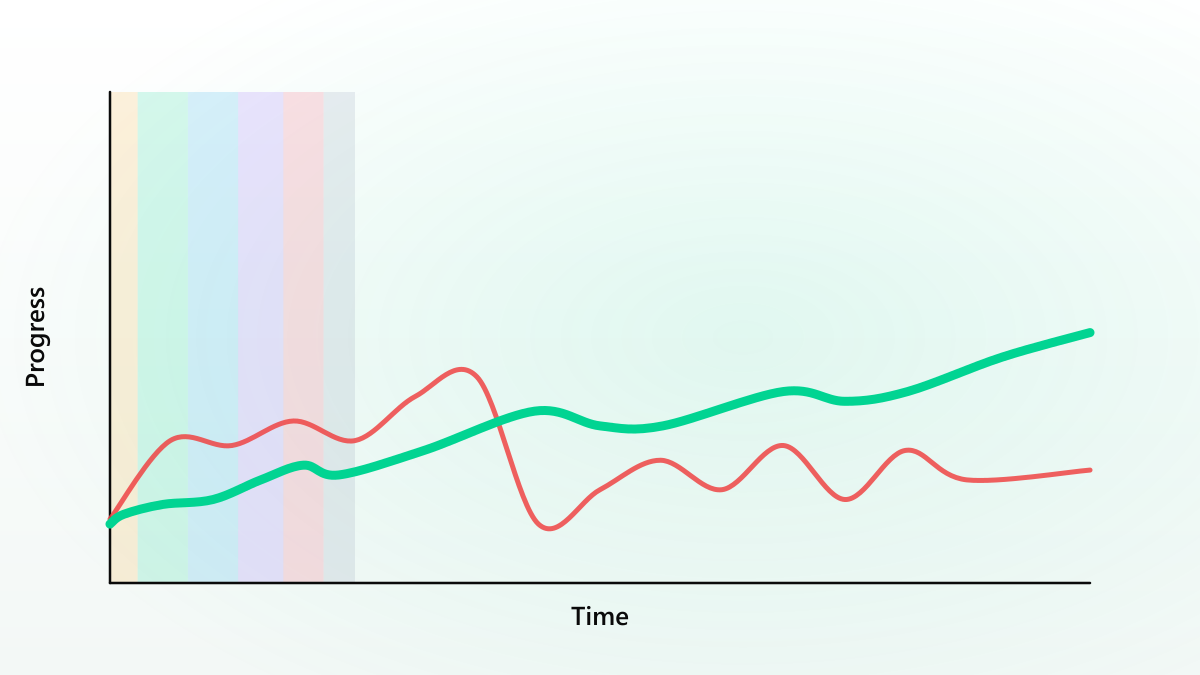
- Progression. Load grows week over week, instead of max from day one.
- Specificity. We train climbing, not abstract fitness.
- Variation. Exercises change, the body does not settle in.
- Undulation. Hard weeks alternate with light ones.
- Recovery. Rest sits in the plan, not in whatever time is left.
None of this is new. It is how athletes have been prepared for decades. It just rarely reaches the climber who trains after work.
Step 3
You pay, and a coach reviews your program before you open it
The best result comes from a human plus a machine. That is why there is no free trial: a coach spends real time on your program before you ever see it.
Twenty four hours. The coach reads your answers and fixes what the algorithm cannot see: a note in your history, an injury you mentioned, a goal that does not quite fit the template. Then the program opens.
Step 4
The program opens one week at a time
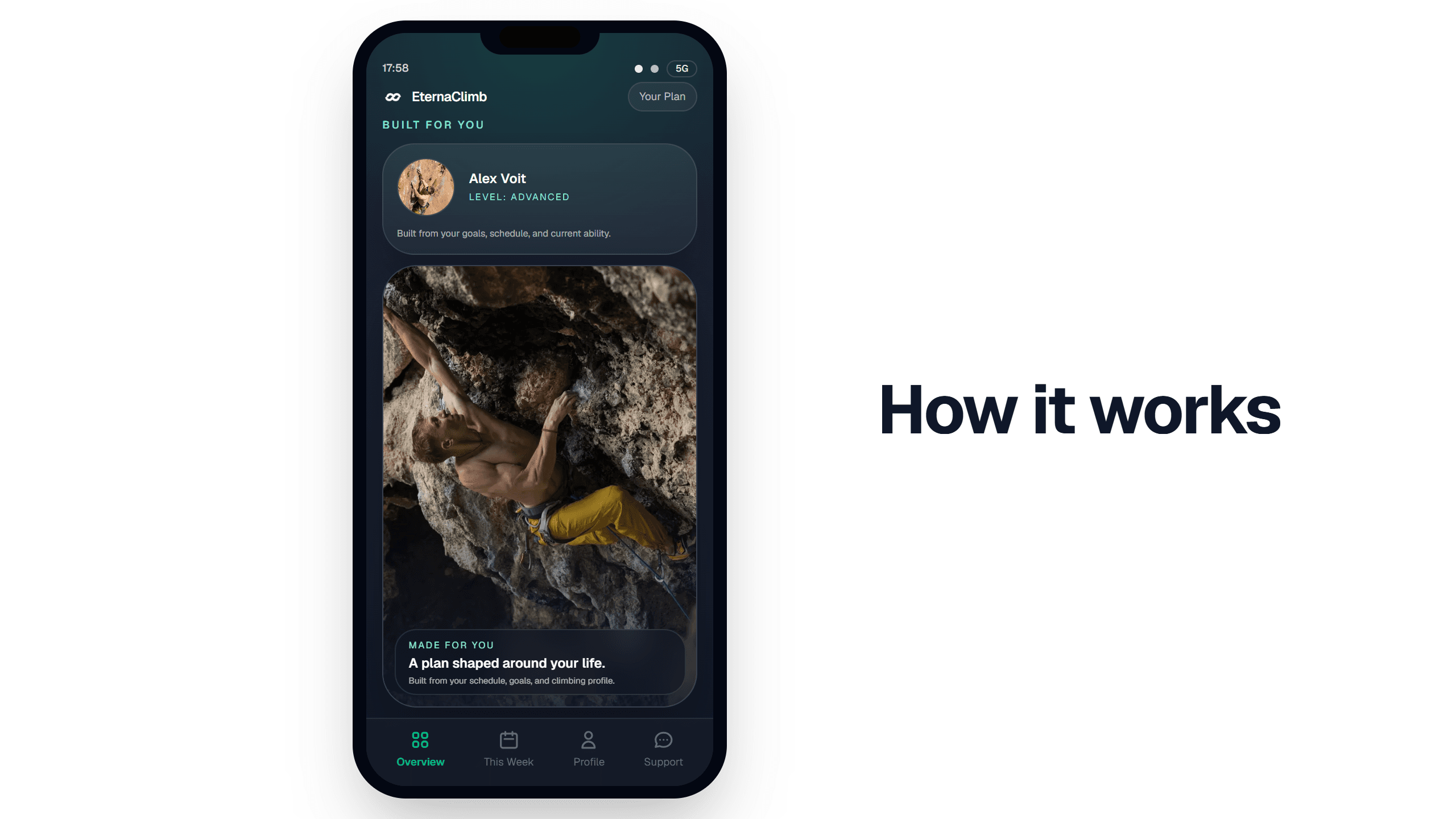
You see the structure of the whole cycle: which phases, when, and why. You train the current one. The next week opens every Monday, on its own. Nobody to wait for. Fill in your weekly review and it opens sooner.
The doses are calculated from you. How many pull-ups you do, whether you add weight to them, what your fingers hold, what shape you are in. Two climbers at the same grade get different weights and different sets.
Step 5
You train, and you log it
You mark sessions and sets: what you did, how much, where you stopped. This is not a nice extra on top of the program. It is part of it.
And this is exactly where I lose people. Logging in the middle of a session feels like a chore. You came to climb, not to fill in tables, and every tap pulls you out of the thing you came for. I am not going to pretend that friction is imaginary. It is real, and for some people it is enough to put them off the whole idea of training to a plan.
So it is worth saying what a plan actually gives you. Most of it is invisible at first glance, and some of it matters more than whether you executed every set exactly as written.
A plan is structure. A plan is discipline. A plan is knowing what you are doing today, why you are doing it, and how it will show up in your body a month from now. It kills the daily negotiation with yourself about whether to train and what to do when you get there. It is a helper you look into before the session, and again after it.
Even when you climb with friends, when half the session goes into talking and pulling on each other's problems, the plan still sets the direction. You manage the session instead of letting it drift wherever the evening takes it.
You do not have to follow it to the letter for it to work. But the wheel has to be in your hands. That is the only way a session goes toward the goal you actually want, instead of wherever it ends up.
Step 6
Plans changed, rebuild it
You traveled. You got sick. You picked a goal with a date on it. The program rebuilds from your current week, and you keep going from where you actually are, not from where the plan assumed you would be.
Step 7
Leave, and your history stays
The weeks you finished stay readable with no end date. You can log in any time. Come back and you pick up where you left off.
That is all of it
You answer the questions. An algorithm builds your cycle. A coach checks it. The first week opens, and every Monday the next one appears. You train, you mark what you did, and when life changes you rebuild the plan from the week you are standing in.
No magic and no black box. It is the thinking a coach would do for you, done in advance, so that a tired evening in the gym is not the thing that decides your training.
So, do you know what you are training in your next session? Or do you decide it when you walk in?
Not sure what is actually holding you back? The quiz sorts that out in a few minutes.
Get Your Personalized Training Plan